News

Food, glorious food! Not only is it fundamental to our survival; it’s at the very heart of our lives and our diverse cultural backgrounds. And it plays a starring role in our social gatherings, whether at home or at a favorite restaurant. Our memories and our emotions, too, are inextricably bound up with food.

However, “there is no one ‘perfect’ way to eat, or one ideal relationship with food,” says Isabel Reckson, a registered dietitian and certified diabetes care and education specialist in the Divisions of Pediatric Endocrinology and Pediatric Nephrology at Weill Cornell Medicine. Every family and every child is unique, she says.

“Generally, a healthy relationship with food allows us to make choices that honor our body and our hunger without guilt. Balance and flexibility in our eating choices are paramount to that relationship, one we often need to work on and reassess throughout our lives as we grow and change.”

What healthy eating habits can parents foster in their children?

Parents are the greatest role models for their young children and teens alike, starting with positive language around food and food choices. Reckson recommends an all-inclusive approach to food, in which no foods are “good” or “bad.”


This article was originally posted in the WCM newsroom  

Norovirus is a common cause of the “stomach flu”—not to be confused with the flu itself, says Dr. Melanie Dubois, a specialist in pediatric infectious diseases and an Assistant Professor in Pediatric Infectious Diseases at Weill Cornell Medicine.

Norovirus infections in the New York Metropolitan Area appear to be high this year, Dr. Dubois says. The virus tends to peak between November and April, so we’re still in norovirus season, with an increase in emergency room visits for vomiting and diarrhea in the area.

The virus mainly causes vomiting and watery diarrhea, but in some patients, it may also cause nausea, fever, body aches and stomach pain. Norovirus infection comes on quickly—just 1 to 2 days after exposure—and its symptoms typically ease within 2 to 3 days.

How contagious is norovirus?

Norovirus is very contagious. You can catch it by:

  • coming into direct contact with an infected person (via vomit or stool)
  • consuming contaminated food or water
  • touching contaminated surfaces at home, on public transportation or in restaurants

And you can continue to spread it to others for 2 weeks or more after your symptoms clear.

Dr. Duncan Hau will serve as a co-investigator of the recently launched study, “Smart Discharges in children over 5: Expanding a personalized public health approach to improving discharge care in resource-limited settings,” sponsored by the Canadian Institutes of Health Research.

Led by Principal Investigator, Dr. Matthew Owen Wiens of the University of British Columbia in Vancouver BC, Canada, and co-investigators from Rwanda, Tanzania, Uganda, and the United States, including Weill Cornell Medicine investigators Dr. Duncan Hau, in the Department of Pediatrics, and Dr. Robert Peck and Dr. Radhika Sundararajan of the Center for Global Health, the study aims to expand Smart Discharges in Uganda to other East African countries to improve child survival.

This article was originally posted in the WCM newsroom

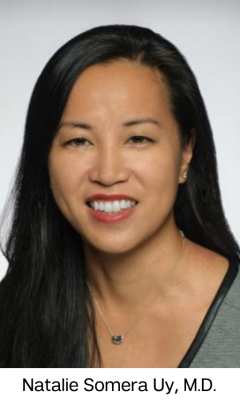
headshot Dr. Natalie Uy

NEW YORK (March 23, 2023)—Dr. Natalie Uy, a leading pediatric nephrologist, has been named chief of the Division of Pediatric Nephrology in the Department of Pediatrics at Weill Cornell Medicine and NewYork-Presbyterian Komansky Children’s Hospital, effective April 17.

The Division of Pediatric Nephrology provides compassionate care for newborns, children and young adults with complex kidney diseases and urologic conditions. Services provided include dialysis and kidney transplantation for patients with end-stage kidney disease.

Dr. Emilie K. Grasset, assistant professor of immunology in pediatrics at Weill Cornell Medicine, has been awarded an NIH R21 award from the National Institute of Allergy and Infectious Diseases (NIAID) for her study, “Bacterial translocation to mesenteric adipose tissue drives pathogenic stromal-B cell interactions leading to inflammatory IgG.”

 Crohn’s disease is an inflammatory bowel disease that has no cure and often leads to disease complications requiring bowel resection surgery. Crohn's disease can also affect children, and antimicrobial antibodies in pediatric patients are predictive of a faster disease progression. Dr. Grasset believes that understanding how antimicrobial antibodies arise will help identify therapeutic targets for treatment of Crohn’s disease.

Weill Cornell Medicine has been awarded a five-year, $4.2 million grant by the National Cancer Institute, part of the National Institutes of Health, to investigate the molecular mechanisms by which immune cells called B cells interact with Epstein-Barr virus (EBV) to cause lymphoma, particularly in people living with HIV. The funding will support projects that began with a grant awarded by the Starr Cancer Consortium.

This article was original published in the WCM Newsroom.

NEW YORK (Feb. 23, 2023)—Dr. Omar Abdul-Rahman, a leading specialist in pediatric genetic medicine, has been named chief of the Division of Medical Genetics in the Department of Pediatrics at Weill Cornell Medicine and NewYork-Presbyterian Komansky Children’s Hospital, effective March 1.

The Division of Medical Genetics provides inpatient and outpatient consultation and medical care for children and adolescents with common and rare genetic conditions, including screening and counseling for inherited disease risk during pregnancy. Dr. Abdul-Rahman, who was recruited to Weill Cornell Medicine as the Horace W. Goldsmith Foundation Professor of Pediatrics, succeeds Dr. Christopher Cunniff, who has led the division since 2014 and remains on the institution’s voluntary faculty as a clinical professor of pediatrics.

This article was original published in the WCM Newsroom.

NEW YORK (Feb. 23, 2023)—Dr. Omar Abdul-Rahman, a leading specialist in pediatric genetic medicine, has been named chief of the Division of Medical Genetics in the Department of Pediatrics at Weill Cornell Medicine and NewYork-Presbyterian Komansky Children’s Hospital, effective March 1.

The Division of Medical Genetics provides inpatient and outpatient consultation and medical care for children and adolescents with common and rare genetic conditions, including screening and counseling for inherited disease risk during pregnancy. Dr. Abdul-Rahman, who was recruited to Weill Cornell Medicine as the Horace W. Goldsmith Foundation Professor of Pediatrics, succeeds Dr. Christopher Cunniff, who has led the division since 2014 and remains on the institution’s voluntary faculty as a clinical professor of pediatrics.

The Department of Pediatrics is pleased to announce the promotion of Catherine McGuinn, M.D. to Associate Professor of Clinical Pediatrics, effective January 1, 2023.

Dr. Catherine McGuinn is an associate professor of pediatrics in the Division of Pediatric Hematology/Oncology at Weill Cornell Medicine and an assistant attending pediatrician at NewYork -Presbyterian Hospital/Weill Cornell Medical Center. Dr. McGuinn is board certified in Pediatrics. She is the Program Director of the Pediatric Hematology/Oncology Fellowship Program.

Dr. McGuinn completed her undergraduate work at Yale University receiving a Bachelor of Arts with a focus in History. A native of New York City, she returned to New York where she received her medical degree from New York University's School of Medicine and completed her internship and residency in Pediatrics at NewYork-Presbyterian Morgan Stanley Children's Hospital at the Columbia University Medical Center. Dr. McGuinn remained at Columbia for her fellowship training in Pediatric Hematology-Oncology, where she selected as Chief Fellow and recognized as Fellow of the Year in 2010.

Dr. McGuinn's clinical interests include the diagnosis and management of children with hematologic and oncologic disorders, with a special interest in disorders of thrombosis and hemostasis, bone marrow failure syndromes, hemoglobinopathies, vascular tumors and benign hematology.

The Department of Pediatrics is pleased to announce the promotion of Jennie Ono, M.D. M.S. to Associate Professor of Clinical Pediatrics, effective January 1, 2023.

Dr. Jennie Ono is an associate professor of clinical pediatrics at Weill Cornell Medicine and associate attending physician at NewYork-Presbyterian Komansky Children's Hospital. She is the Medical Director for Inpatient Pediatrics and Program Director of the New York Children’s Asthma Program for Innovation Research and Education (NYC ASPIRE), a collaborative program between the Pediatric Asthma Program at Weill Cornell Medicine and the Asthma Center at NewYork-Presbyterian Queens. Dr. Ono is board certified in Pediatrics and Pediatric Hospital Medicine.

Dr. Ono received her B.A. from Vassar College. She attended the State University of New York at Buffalo where she received her M.D. from the School of Medicine and Biomedical Sciences and later completed her M.S. at the Weill Graduate School of Medical Sciences of Cornell University.  She came to New York-Presbyterian/Weill Cornell Medical Center for residency training where she remained as Chief Resident, joining the faculty in 2010 in the division of General Academic Pediatrics.

Pediatrics Weill Cornell Medicine Appointments & Referrals: (646) 962-KIDS (646) 962-5437 Chair's Office: Weill Cornell Medicine 525 E 68th St.
Box 225
New York, NY 10065 (646) 962-5437